
Your system opens every morning. Staff enter records, customers receive replies and the monthly report arrives. Why pay someone to review it?
Because the computers and software can be running while the information people need is missing or wrong. An IT systems audit is a review of how the computers, software and people's work fit together. It helps management understand whether anything needs to change.
The repair is finished. The record says otherwise.
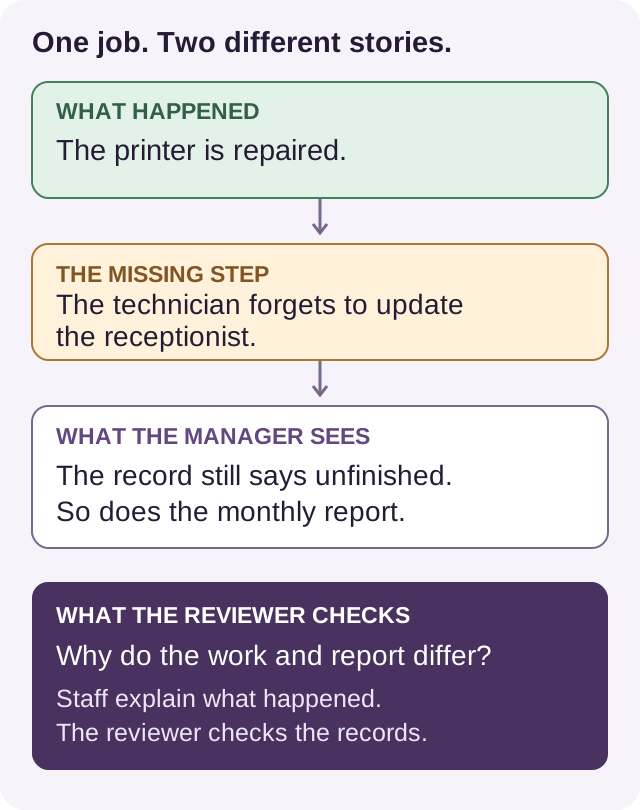
Imagine a small company that maintains office equipment. A customer calls about a faulty printer. The receptionist records the request in the company's system, then asks in a group chat which technician can attend. Staff do not always record who is handling each job in the system, so she keeps a separate spreadsheet.
The technician repairs the printer, but leaves for the next appointment without telling her. The customer is happy. The job is done. On screen, however, the request is still open.
Usually, the receptionist catches these gaps by chasing technicians with follow-up phone calls before preparing the monthly report. This time, she is also answering calls, arranging visits and following up other requests. She misses this one. The manager receives a report that counts the repair as unfinished.
Nothing has crashed, and no one has reported a software fault. Yet the manager has the wrong picture of the work done.
Now suppose the receptionist is off sick for a week. Her colleague can enter new requests, but has to search the system, spreadsheet and messages to find out who is doing each job and whether it is finished. Some details are known only to the sick receptionist. Customers still call, and the person covering cannot readily tell them what is happening.
The receptionist has been holding the process together. Her extra work has hidden how much the company depends on one person remembering, checking and chasing.
Why people give different answers about the same system
Until the missing repair comes to light, the manager may honestly say, “The system works. I get my report.” The technician may agree because the customer received the repair. The receptionist may say, “I cannot keep up with all the checking.”
These opinions describe different parts of the same process. The manager sees the report, the technician sees the completed job, and the receptionist sees the gaps between them.
A reviewer can bring those accounts together and check them against what actually happens. An independent reviewer assesses work they were not responsible for and should be free to report what they find. That outside view can help management see difficulties that have become part of the daily routine.
You bring the concern. The reviewer investigates.
Management might simply ask: “Is our system helping people get their work done, and is our information properly protected?” The reviewer decides how to investigate. Management does not need to know about the missed repair first.
The reviewer proposes the scope: what they will and will not check. They also explain what permission they need to see records or use the system. Management agrees these arrangements before the work begins. Routine support might fix a fault someone has reported. A review can begin when no one knows whether there is a fault at all.
In our fictional company, the reviewer might speak with staff, check how the software behaves and compare selected repair records with the monthly report. Their questions could include:
- Who is responsible for keeping job records up to date? Who records progress and follows up missing updates?
- Who can see or change information? Can the right staff do their work, and is access removed when someone leaves?
- Does the report show what really happened? Was an update missed, lost by the software or left out of the report?
- Why is the receptionist doing the work twice? What does her spreadsheet provide that the system does not?
- What happens if a person or the system is unavailable? Can someone cover, and can staff keep track of requests?
These are examples of the reviewer's questions. They do not cover every security check a company might need.
The board, which oversees the company, or shareholders, who own shares in it, can also request a review without waiting for complaints. Before supporting another branch, they may want to know whether the current systems can handle the extra work. The organisation agrees who may see its information and who will receive the findings.
From a finding to a decision
In our fictional company, a useful finding might read: “The repair was finished, but the report still showed it as unfinished. The record depended on the receptionist getting an update from the technician.”
That gives management a clear problem to address. It does not yet tell them how often it happens.
The reviewer could recommend checking whether technicians can record completed jobs themselves, agreeing who does this and arranging cover for missing updates. The company could try that change with a few jobs. It could then check whether the report is right and another receptionist can pick up the work.
That response fits this example. Another review might find a bug—a mistake in the software—or a security problem, such as someone still having access after leaving the company. It might find no significant problem within the agreed scope. The findings should determine what happens next.
If management already has a clear, well-supported picture, another review may add little. Where that picture is missing, the benefit is knowing what needs attention before paying for changes or a replacement. A review explains what was checked; it cannot guarantee that every possible problem has been found.
A small place to begin
Crownzcom's systems reviews and audits offer a way to explore these concerns. You can tell us what you want to understand.
For an initial conversation, a short outline can help:
- What management wants to understand, and any plans such as opening another branch.
- The software in use and any concerns already raised.
- Who uses it and who looks after it.
- Any known limits on sharing information or arranging time with staff.
The reviewer can guide the work from there. There is no need to work out the cause beforehand.