
Why turn existing notes and presentations into interactive learning?
The training is over. Staff have the notes. But how does a manager know whether they can use what they have learnt?
Imagine a school training its bursar, the person who handles its money, to check supplier payments. She has read the school's written payment rules and attended a briefing. One rule says she must check that a request to change payment details really came from the supplier.
Now a training exercise gives her a situation to work through. A WhatsApp message from an unfamiliar number says: “Please use these new payment details so we can release the desks today.” The desks are needed before term starts. Should she pay, reply to the message or contact the supplier another way?
This is where interactive training can help: learners do an activity or make a choice and receive a response. Instead of only reading the rule, she can see an example of the check, try it herself and get an explanation of her answer. A practice story can then show what follows from her choice. If she sends money to the wrong account in the exercise, she can understand the mistake and try again without losing real money.
That response is called feedback: it explains what happened and why. Her choices and explanations also give the trainer something to discuss, beyond whether she attended the briefing or read the notes.
Documents and presentations still have a place. They may be enough for looking up a rule or explaining a familiar task. Interactive learning adds a chance to use the guidance during training, before staff face a similar decision at work.
When the instruction needs an explanation
For the fictional school, the same written rule can become a lesson that shows the check and lets the learner try it. These cards make that difference visible.
READ THE RULE
WRITTEN PAYMENT RULE
Check that a request to change payment details really came from the supplier.
SEE IT AND TRY IT
SCHOOL SUPPLIER RECORD
Contact: saved supplier number
Payment: ACCOUNT A
NEW WHATSAPP MESSAGE
From: unfamiliar number
Please pay ACCOUNT B today.
WHICH NUMBER SHOULD SHE CALL?
Saved supplier number
OR the unfamiliar message number?
EXAMPLE FEEDBACK
Call the saved supplier number. A reply from the new sender is not proof that the supplier requested the change.
Fictional exercise. A and B are placeholders.
The example follows official guidance on checking supplier payment changes: the check uses a previously known number rather than one supplied in the request.
This is one approach to interactive learning: turning dense notes into short lessons with pictures, videos and activities. A short video could demonstrate the check before the activity. The full document can remain available for reference.
When knowing the steps is not enough
The visual lesson shows how the check works. A practice story adds the pressure in the bursar's situation: the desks are needed, and the message says payment will release the delivery.
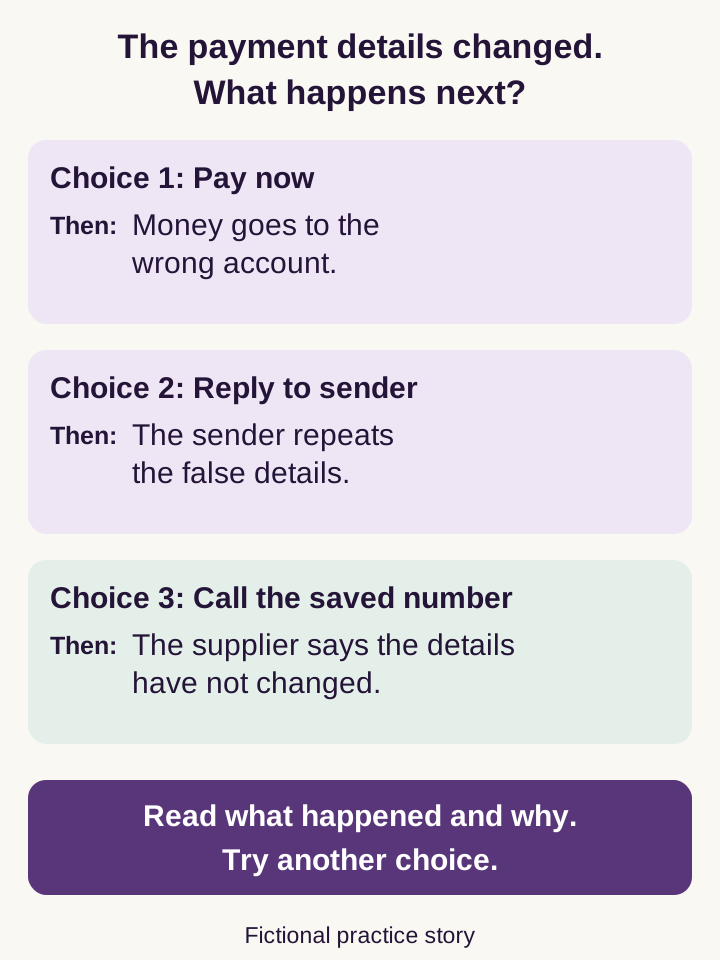
The learner takes the bursar's place. They can pay now, reply to the message or call the supplier using the saved number. In this fictional story, the message is a scam.
Paying sends the money to the wrong account. The real supplier remains unpaid and holds back the desks. The school must deal with the missing money and find seating for the class.
Replying brings another message saying the new details are correct. The learner now faces a second decision: accept that answer or check with someone else? Calling the saved number reveals that the supplier never requested a change.
The next step could involve deciding whom to tell at the school and how to arrange the correct payment. The school's own rules would shape those choices.
This is a branching scenario: a practice story that changes with the learner's choices. The feedback explains, for example, why a reply from the same sender was not enough proof. Another try lets the learner explore a different choice without moving real money.
How the two approaches work together
The same school payment example can become two different lessons. The cards show what the learner sees, does and gets back from each one.
Two ways to teach the same topic
Both use the fictional school's payment check. The difference is what the learner does.
See how the check works
The learner sees
The bill, message and saved supplier details side by side.
The learner tries
Choosing which number to call in a guided activity.
The course responds
Explains why the saved number is the right choice.
Decide what to do
The learner faces
A request to change payment details before a delivery.
The learner chooses
Pay, reply or call the saved supplier number.
The story responds
Shows what happens next, explains why and offers a retry.
One course can explain the check first, then let the learner practise the decision.
One course can explain the check first, then let the learner practise the decision without pointing out the answer. The trainer can also ask why they chose that action.
These are Crownzcom's two main approaches to interactive learning, rather than the only ways learning can work. The AI reminder demo offers a lighter example of choices and feedback.
Why the school's knowledge matters
Realistic practice needs more than a copy of the rules. Someone who knows the school's work can explain who checks supplier details, who approves payments and what happens when something looks wrong.
The school provides current notes or slides and explains what staff need to understand or do. Crownzcom shapes that material into lessons and practice. A person who knows the subject checks that the explanations, choices and feedback are accurate.
Writing and checking each route takes time. When the school's rules change, parts of the course may need to change too. The course also needs to work on learners' phones or computers and with their internet connections. Some learners may need captions or other ways to read, hear or use the material.
For schools and training teams considering this approach, Crownzcom can discuss their material and learning needs.
Where each approach fits
- Looking up information: a clear document may be enough.
- Understanding how something works: visual lessons show the steps, with activities to try.
- Making choices where mistakes matter: practice stories let learners follow a decision through and try again.
- Understanding and applying: one course can combine explanation with decision practice.